
Brass and Bronze: Technical Properties and Industrial Applications

Copper alloys have been fundamental to industrial manufacturing for centuries, and among them, brass and bronze remain two of the most widely used material families. While both are copper-based, they differ significantly in composition, mechanical behavior, and suitability for specific applications. Understanding the distinction between brass properties and bronze properties is essential for engineers, machinists, and procurement specialists who must balance performance requirements with machining efficiency and cost.
This article provides a detailed technical overview of brass vs bronze, covering their metallurgical characteristics, machinability, corrosion resistance, and typical industrial uses. The focus is on European brass grades and European bronze grades as defined by EN standards, with practical guidance for metal alloy selection in CNC machining and heavy-duty wear applications.
!Brass bars and rods in industrial warehouse
Brass (Copper-Zinc Alloys)
Brass is a copper alloy in which zinc is the principal alloying element. The zinc content typically ranges from 5% to 45%, and this proportion directly affects the alloy's mechanical properties, color, and workability. Higher zinc content increases strength and hardness but reduces ductility and corrosion resistance.
Brasses are classified into two main categories based on their microstructure:
- Alpha brasses (up to ~37% zinc): Single-phase alloys with excellent cold workability and corrosion resistance
- Alpha-beta brasses (37–45% zinc): Dual-phase alloys with higher strength but reduced ductility; better suited for hot working
Common European Brass Grades
The European standard EN 12164 and EN 12167 define wrought brass alloys. Key grades include:
Mechanical Properties
Brass alloys exhibit tensile strengths ranging from 300 MPa to 550 MPa depending on composition and temper. Hardness values typically fall between 80 HB and 180 HB. The addition of lead does not significantly affect strength but dramatically improves chip breaking during machining.
Key mechanical characteristics:
- Tensile strength: 300–550 MPa (depending on alloy and temper)
- Yield strength: 100–400 MPa
- Elongation: 5–50% (alpha brasses are more ductile)
- Hardness: 80–180 HB
Machinability of Brass
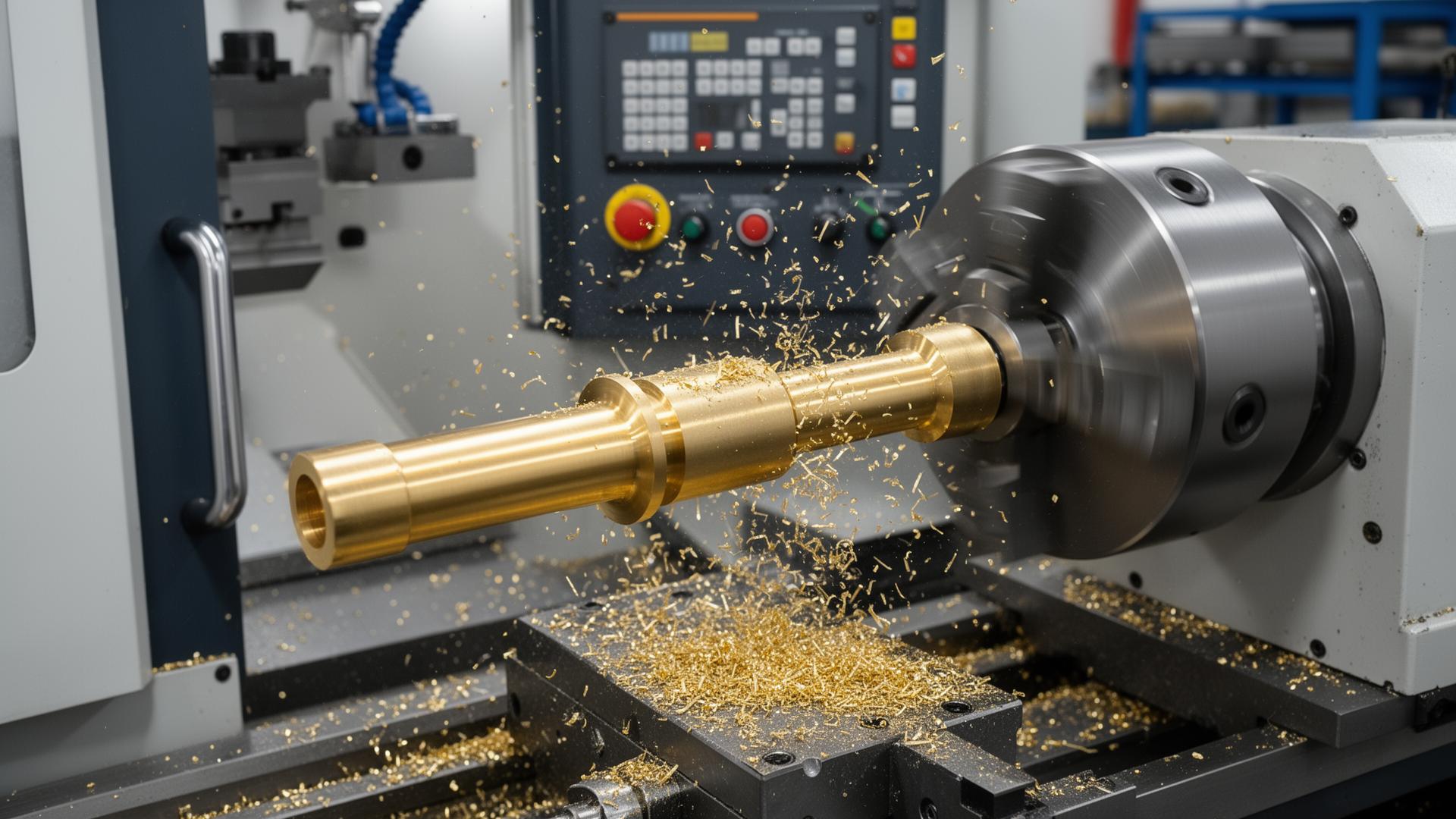
The machinability of brass is one of its primary industrial advantages. Free-cutting brasses such as CW614N (CuZn39Pb3) are rated at 100% on the machinability index, serving as the reference standard against which other alloys are compared.
The lead content in free-cutting brasses creates microscopic discontinuities in the chip, causing it to break into small segments rather than forming long, stringy swarf. This behavior is critical for high-speed CNC machining brass operations, where uninterrupted chip flow is essential for automated production.
Recommended cutting parameters for leaded brass:
- Cutting speed: 150–300 m/min
- Feed rate: 0.1–0.4 mm/rev
- Tool material: Uncoated carbide or HSS
- Coolant: Dry cutting preferred; light oil if needed
!CNC machining brass component with metal chips
Formability and Cold Working
Alpha brasses (CW508L and similar) offer excellent cold formability and are commonly used for deep drawing, stamping, and spinning operations. Work hardening occurs during cold deformation, requiring intermediate annealing for complex forming sequences.
Weldability and Brazing
Brass can be brazed and soldered with appropriate filler materials. However, fusion welding is generally not recommended due to zinc volatilization, which creates porosity and toxic fumes. When welding is necessary, silicon bronze filler rods are often used to minimize zinc loss.
Corrosion Resistance
Brass provides good resistance to atmospheric corrosion and freshwater environments. However, brasses with zinc content above 15% are susceptible to dezincification—a form of selective corrosion where zinc leaches out, leaving a porous copper structure. Dezincification-resistant alloys like CW602N contain small amounts of arsenic to inhibit this degradation.
Electrical and Thermal Conductivity
Brass offers moderate electrical conductivity (approximately 25–30% IACS depending on composition) and good thermal conductivity. These properties make it suitable for electrical connectors, terminals, and heat exchanger components.
Bronze (Copper-Tin and Special Copper Alloys)
Bronze refers to a family of copper alloys where tin, aluminum, silicon, or other elements serve as the primary alloying additions. Unlike brass, which is specifically copper-zinc, bronze encompasses a broader range of compositions, each engineered for specific performance characteristics.
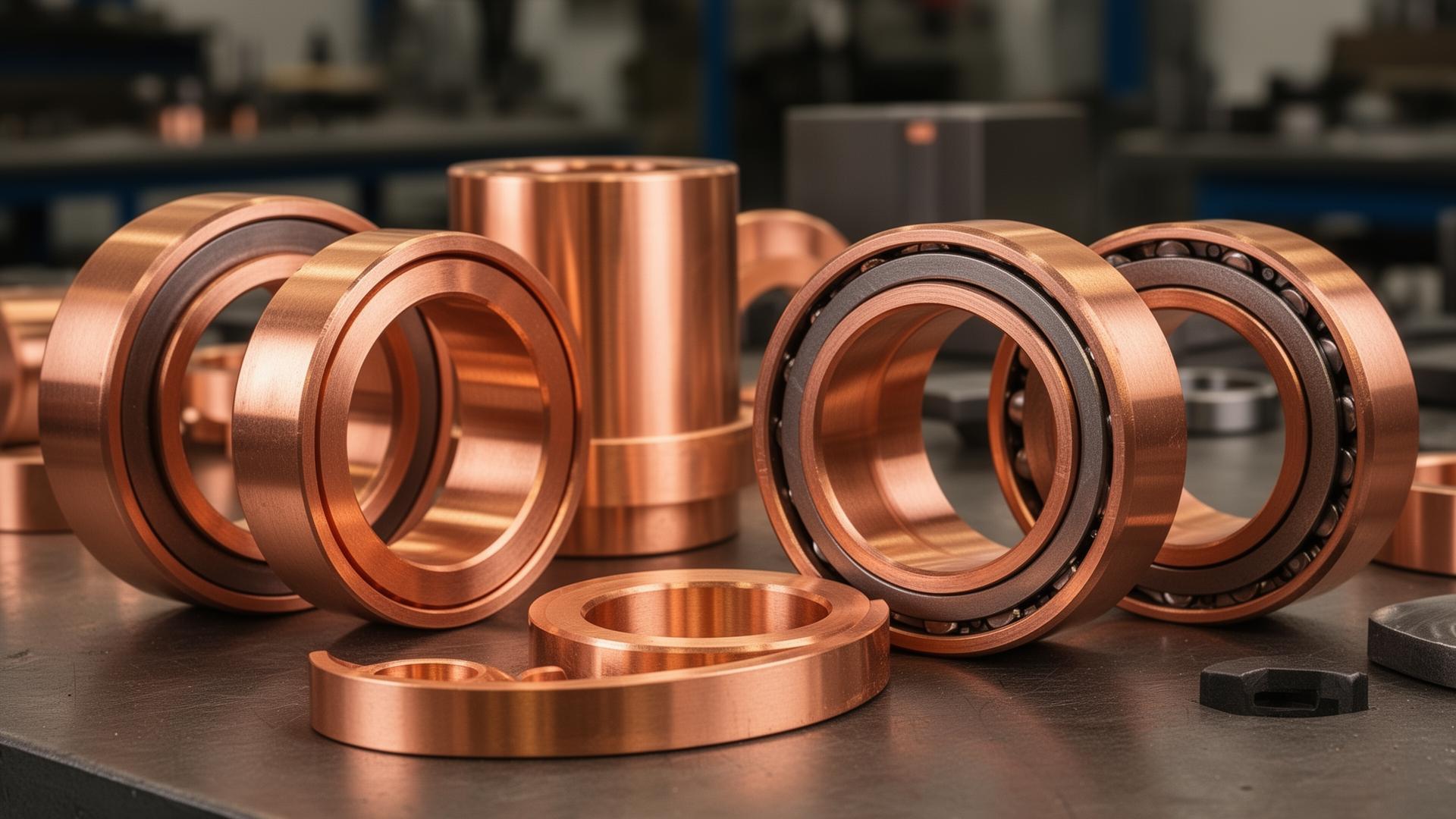
The defining bronze properties include superior wear resistance, higher strength than brass, and excellent performance in corrosive environments—particularly seawater. These attributes make bronze the material of choice for bearing bronze materials, marine components, and heavy mechanical parts.
!Bronze bushings and bearings precision components
Common European Bronze Grades
European bronze grades are standardized under EN 1982 (cast alloys) and EN 12163 (wrought alloys):
Mechanical Strength and Fatigue Resistance
Tin bronzes develop high strength through solid solution hardening. CuSn12 achieves tensile strengths of 280–350 MPa in the as-cast condition, with hardness values of 90–120 HB. Aluminum bronzes such as CuAl10Ni5Fe4 reach tensile strengths exceeding 650 MPa with hardness above 170 HB.
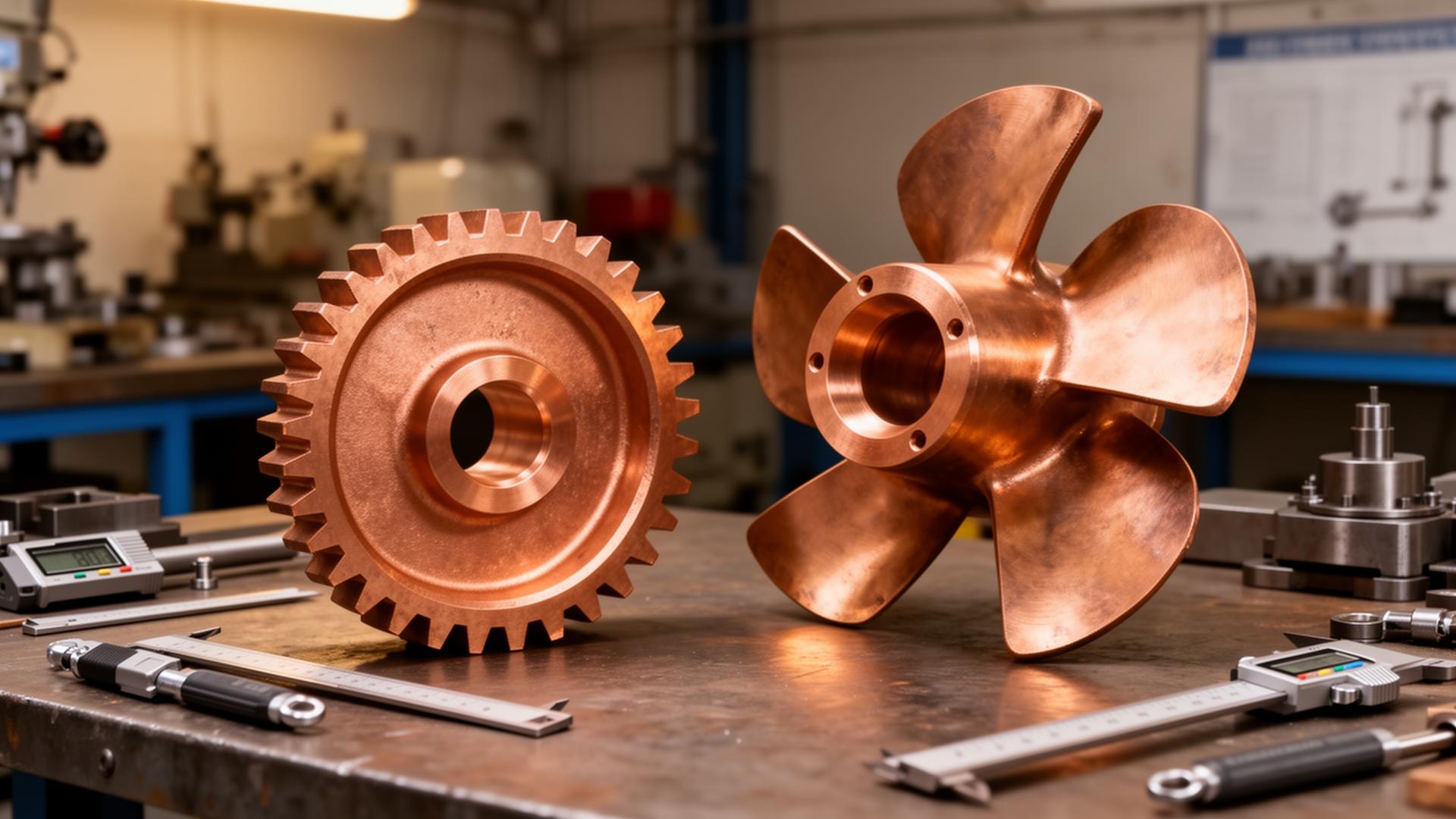
Bronze alloys exhibit excellent fatigue resistance, making them suitable for cyclically loaded components such as gears, worm wheels, and valve seats.
Wear Resistance and Sliding Properties
The wear resistance bronze alloys offer is their most valuable characteristic. Tin bronzes form a thin oxide layer during operation that acts as a solid lubricant, reducing friction against steel counterfaces. This self-lubricating behavior is essential for plain bearings operating under boundary lubrication conditions.
Phosphor bronzes (CuSn8P) contain small amounts of phosphorus that further enhance wear properties and fatigue strength.
Corrosion Resistance
Bronze alloys provide excellent corrosion resistance in marine and chemical environments. Aluminum bronzes form a protective aluminum oxide layer that resists attack by seawater, dilute acids, and industrial atmospheres. This makes them standard materials for propellers, pump impellers, and valve bodies.
Bronze Machining Considerations
Bronze machining requires different approaches than brass. Tin bronzes tend to produce long, continuous chips that can wrap around tooling. Leaded grades such as CuSn7Zn4Pb7 improve chip breaking but still require slower cutting speeds than brass.
Typical parameters for bronze machining:
- Cutting speed: 60–150 m/min (lower than brass)
- Feed rate: 0.1–0.3 mm/rev
- Tool material: Carbide with positive rake angles
- Coolant: Recommended for improved surface finish
Brass vs Bronze – Technical Comparison
When comparing brass vs bronze for a specific application, engineers must consider multiple factors:
Bronze is preferred for heavy-duty and wear applications where service life under load is critical. Brass excels in high-volume precision machining where cycle time and tool life are primary concerns.
!Bronze gear and marine propeller components
Machining Considerations (CNC and Conventional)
Cutting Parameters
CNC machining brass allows for aggressive cutting speeds due to the alloy's free-cutting nature. Bronze requires more conservative parameters to manage heat generation and chip control.
Tool Material Selection
- Brass: Uncoated carbide or HSS; sharp edges essential
- Bronze: Coated carbide (TiN, TiAlN) for aluminum bronzes; HSS acceptable for tin bronzes
Chip Formation
Leaded brasses produce ideal small chips. Tin bronzes form continuous chips requiring chip breakers or peck drilling cycles. Aluminum bronzes generate abrasive chips that accelerate tool wear.
Surface Finish
Both alloys can achieve excellent surface finishes (Ra < 1.6 μm) with appropriate tooling. Bronze often requires finishing passes at reduced feed rates.
Cooling and Lubrication
Brass is commonly machined dry or with minimal lubrication. Bronze benefits from coolant application, particularly for threading and drilling operations where heat accumulation affects dimensional accuracy.
Typical Industrial Applications
Brass Applications
- Valves and fittings: Plumbing, hydraulic, and pneumatic systems
- Machined components: Bushings, nuts, threaded inserts
- Electrical connectors: Terminals, socket contacts, switchgear parts
- Decorative parts: Architectural hardware, musical instruments
Bronze Applications
- Bearings and bushings: Plain bearings for rotating machinery
- Gears and wear plates: Worm gears, sliding surfaces
- Marine components: Propellers, seawater pumps, hull fittings
- Heavy mechanical parts: Valve guides, piston rings, thrust washers
Practical Guidelines for Alloy Selection
When to Choose Brass
- High-volume production requiring maximum machining efficiency
- Applications where corrosion resistance to freshwater is sufficient
- Electrical components requiring moderate conductivity
- Cost-sensitive projects where bronze's premium is not justified
When to Choose Bronze
- Bearing surfaces operating under load
- Marine or corrosive chemical environments
- Applications requiring maximum wear resistance
- Components subject to fatigue loading
Common Selection Mistakes
- Specifying brass for bearing applications where wear resistance is critical
- Using non-dezincification-resistant brass in hot water systems
- Selecting tin bronze where aluminum bronze's strength is needed
- Ignoring the machinability penalty when switching from brass to bronze
Cost vs. Performance Considerations
Bronze typically costs 20–50% more than equivalent brass grades. However, in wear applications, bronze's extended service life often delivers lower total cost of ownership. Machining costs for bronze are higher due to slower cutting speeds and increased tool consumption.
Conclusion
The selection between brass and bronze is not merely a material preference—it is an engineering decision that affects component performance, manufacturing efficiency, and operational costs. Brass properties make it ideal for high-speed CNC machining and precision components where excellent machinability is paramount. Bronze properties deliver superior wear resistance and corrosion performance essential for bearings, marine hardware, and heavy-duty mechanical systems.
By understanding European brass grades such as CW614N and European bronze grades like CuSn12 and CuAl10Ni5Fe4, engineers and buyers can make informed decisions that optimize both manufacturing processes and end-use performance. Correct copper alloys selection improves machining productivity, extends component service life, and ultimately reduces the total cost of ownership in industrial applications.