
HSS vs SHS/RHS: American and European Tube Sizes Explained
HSS vs SHS/RHS: American and European Tube Sizes Explained
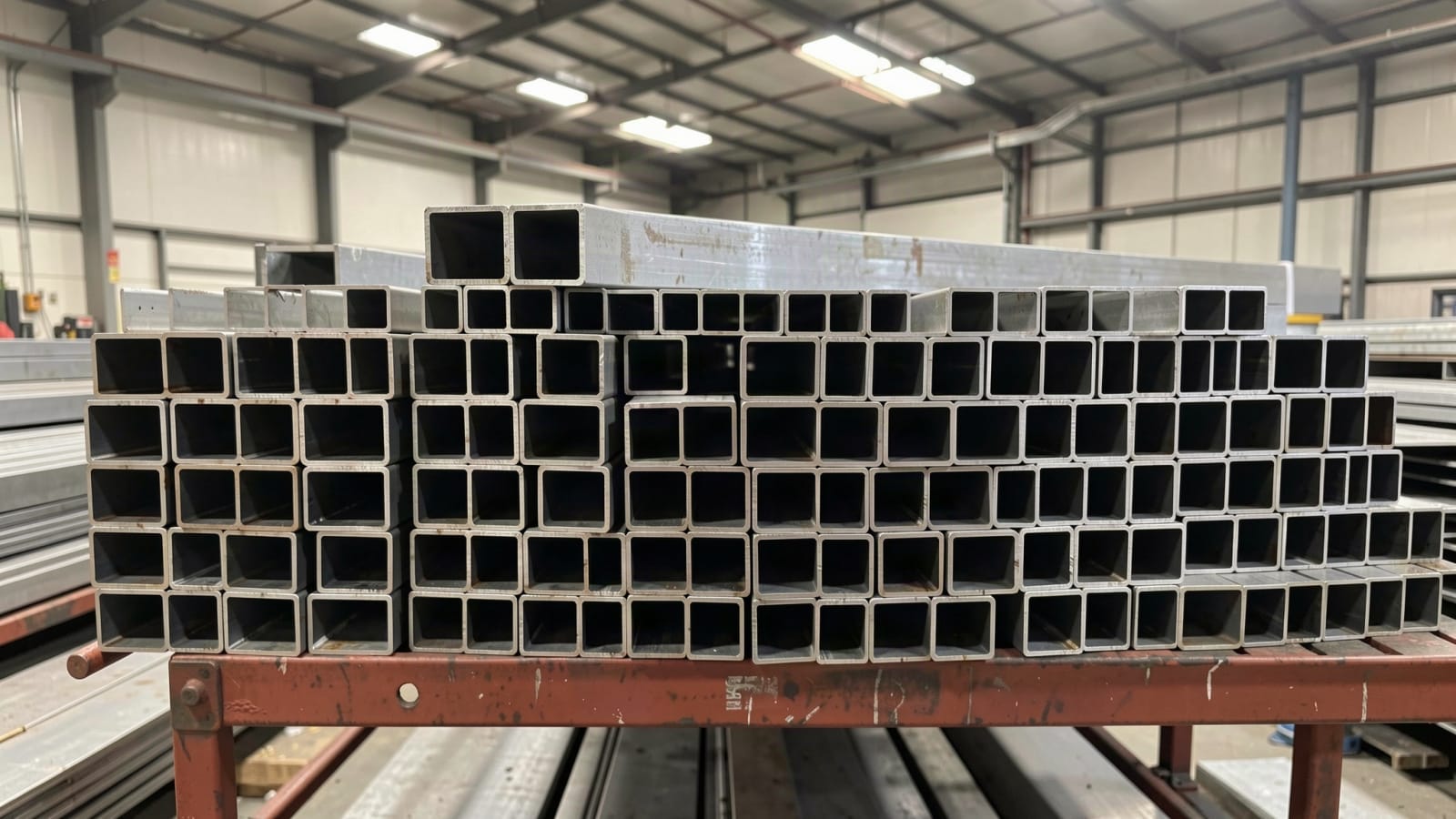
Hollow sections carry two naming systems that refuse to meet: American drawings call for HSS6x4x3/8, European ones for RHS 150×100×8. Same idea, different standards — and one hidden factor that changes real capacity. Here is the full picture.
Reading the designations
- HSS (ASTM A500): outside height × width × nominal wall, in inches. An HSS6x4x3/8 is 6×4 in with a 3/8 in wall. Weight is not in the name.
- SHS/RHS (EN 10219): outside dimensions × wall, in millimeters. An RHS 150×100×8 is 150×100 mm with an 8 mm wall.
Square tubes are SHS in Europe; in the US they're just square HSS — an HSS4x4x1/4 is the everyday workhorse of equipment frames.
The 0.93 rule — the trap in every conversion
ASTM A500 allows a wall tolerance of −10%, so AISC mandates designing with a design wall of 0.93×nominal: a "3/8 in" wall counts as 0.349 in structurally. EN 10219 has no such reduction — the metric nominal wall is the design wall.
The consequence: an HSS and an SHS/RHS with seemingly identical converted dimensions are not equivalent. Convert an HSS to metric, forget the 0.93, and you overestimate the American section by ~7% in area and stiffness. Our HSS chart already bakes the 0.93 into every published property, so the numbers you read are the numbers you design with.
Finding the closest cousin
A quick translation guide (always verify with real tables):
- HSS4x4x1/4 ↔ SHS 100×100×6 — nearly twins in size, the SHS slightly stiffer thanks to full nominal wall
- HSS6x6x3/8 ↔ SHS 150×150×8
- HSS8x4x3/8 ↔ RHS 200×100×8
- HSS10x6x1/2 ↔ RHS 250×150×10 — 254×152 mm vs 250×150 mm, nearly exact
With both HSS and SHS/RHS tables on one site, the side-by-side takes seconds.
Angles got the same treatment
Alongside the tubes, our steel angle chart now covers 32 equal and unequal leg sizes from L2x2 to L8x8 — the "angle iron" of every fab shop, with both-axis section properties that matter precisely because angles are so weak about the minor axis.
Which should you stock?
If your customers build to US specs: HSS + W + C. To Eurocode: SHS/RHS + IPE/HEA + UPN. Export shops need both vocabularies — which is exactly why every datasheet on this site carries imperial and metric values side by side, and a beam calculator that doesn't care which standard your numbers came from.