
W-Beam Sizes Explained: How to Read a W8x31 (Complete Chart)
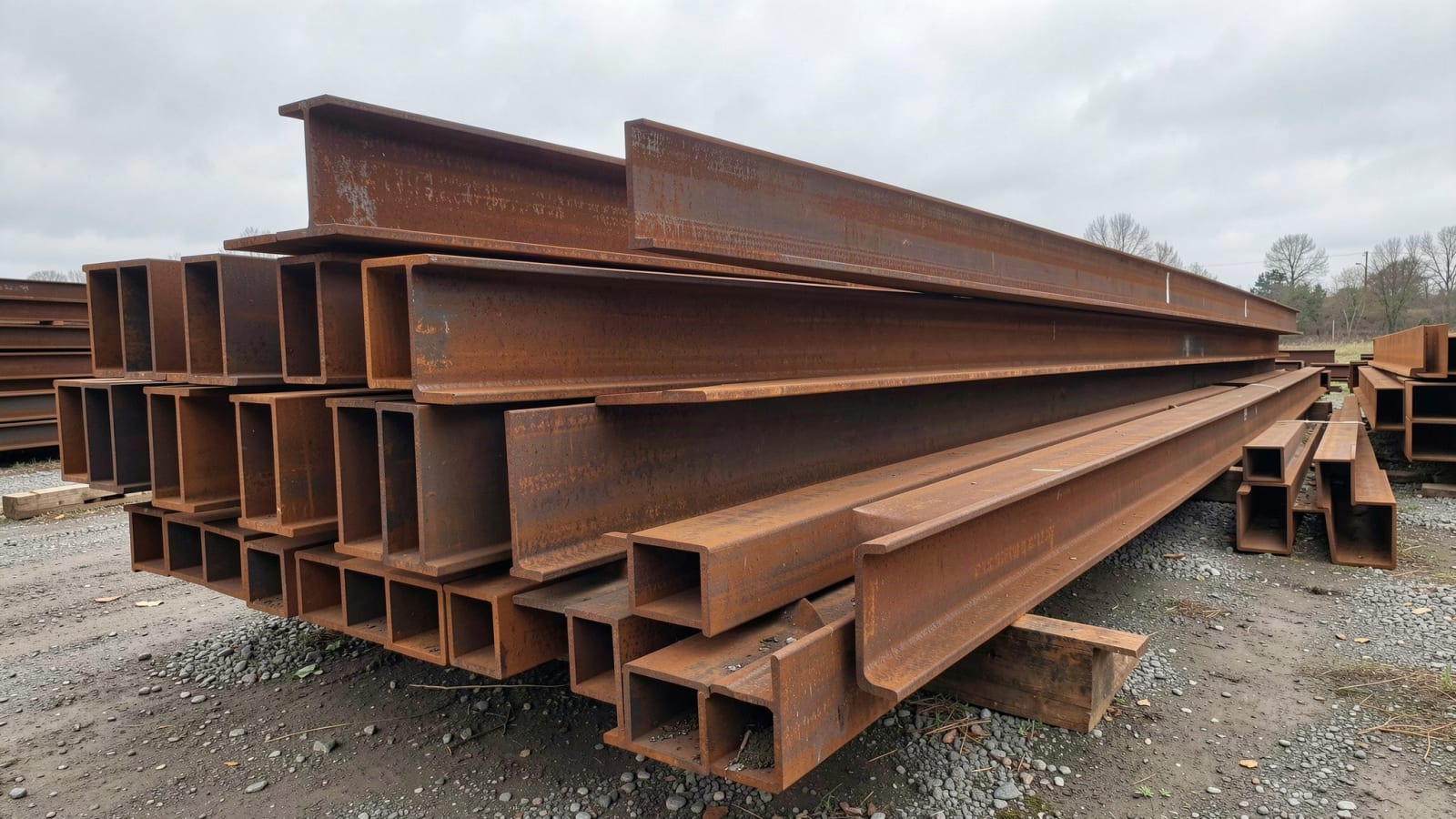
W-Beam Sizes Explained: How to Read a W8x31 (Complete Chart)
Every steel drawing in North America is full of designations like W8x31, W12x26, or W21x44 — and misreading them is one of the most common (and expensive) mistakes in fabrication. Here is exactly what the numbers mean, where they lie to you, and where to find the real values.
The designation, decoded
A W-shape callout has two numbers:
- The first number is the nominal depth in inches. A W8x31 is nominally 8 inches deep.
- The second number is the weight in pounds per foot. That same W8x31 weighs 31 lb/ft — a 40 ft stick weighs 1,240 lb, which is what your crane and your freight quote care about.
"W" stands for wide-flange: the flanges are wide, essentially parallel-faced, and meaty — which is why W-shapes replaced the old tapered-flange S-beams in almost all US construction.
Where the designation lies: nominal vs actual depth
The nominal depth is a family label, not a measurement. Within the W8 family, a W8x31 really is 8.00 in deep — but a W8x67 is 9.00 in deep, a full inch more. The extra material has to go somewhere, and it goes into thicker flanges and a deeper section.
This bites in two places: detailing (your connection plates meet a 9-inch beam, not an 8-inch one) and clearances (a "W8" that must slide into an 8¼-inch gap might simply not fit). Always design and detail with the actual d from the table, never the family number.
Weight is the second number — use it
Because the weight is right in the name, quick take-off math needs no tables: a W12x26 floor with 300 linear feet of beam is 300 × 26 = 7,800 lb of steel. For anything beyond lb/ft — kg/m for export jobs, bar weights, cross-section area — every size page in our W-shape chart lists imperial values with metric conversions side by side.
Same depth, very different beams
Within one depth family the section properties spread enormously. Compare the lightest and heaviest common W12 beams:
- W12x26 — 26 lb/ft, Ix = 204 in⁴, flange 6.49 in wide
- W12x136 — 136 lb/ft, Ix = 1,240 in⁴, flange 12.4 in wide
Five times the steel buys six times the stiffness — and the wide-flange versions (bf ≈ d) behave like European HEA/HEB columns, while narrow ones work like IPE floor beams. If deflection governs your design, stepping up one weight within the family is usually the cheapest fix: a W16x31 is 19% heavier than a W16x26 but 25% stiffer.
Checking a beam in 30 seconds
For a quick serviceability check you need three numbers: span, load, and Ix. Every datasheet in our chart includes a worked example (simply supported, 10 kip midspan load, span ≈ 19× depth) with the L/360 verdict — and a one-click link that opens the beam deflection calculator pre-filled with that shape's geometry, so you can swap in your own span and load immediately.
W-shapes vs European profiles
Working across markets? Narrow-flange W-shapes correspond roughly to IPE sections, wide-flange ones to HEA/HEB — same role, different standards, not interchangeable in a design. Grade note: modern US W-shapes are ASTM A992 (Fy = 50 ksi, roughly S355 territory); legacy calcs may assume A36.
The chart
The full W-shape chart covers 119 sizes from W6x9 to W24x146 — depth, flange width, web and flange thickness, weight, area, Ix/Sx/Iy — each linking to a complete datasheet with metric conversions, bar weights, FAQ, and the deflection example.